How a task mining project works: From the idea to measurable improvements
Julia
Task mining solutions are not a classic software rollout, but rather a structured improvement project. A clear process is crucial to achieving transparency, acceptance and reliable results. This article explains step by step how a typical task mining project with Paxray works – from defining objectives to data protection and data collection to analysis, measures and implementation.
The phases of a task mining project
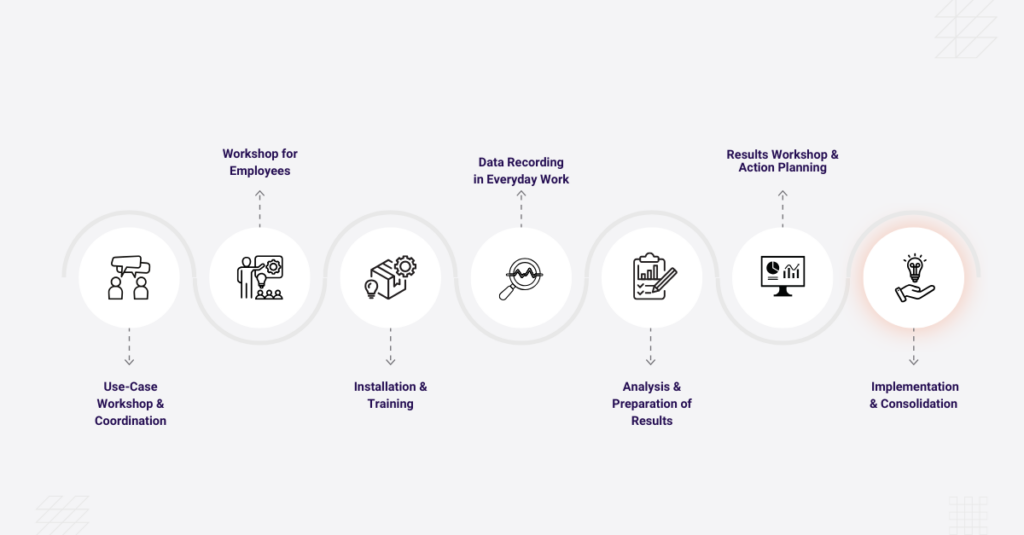
At Paxray, a task mining project follows a clear phase logic: setup, recording, analysis and measures. This structure ensures that everyone involved knows what is happening when, what roles are necessary and what results are expected.
The process of a task mining project at Paxray
Phase 1: Use case workshop and goal definition
The first step is a use case workshop. Together, we define the goals, scope, key questions, responsibilities and schedule. Typical questions include: Which processes should be examined? Is the focus on efficiency, automation, quality or costs? This step lays the foundation for the overall success of the project.
Phase 2: Coordination with IT, data protection and works council
Early coordination with IT, data protection and the works council is crucial. This involves clarifying technical framework conditions, GDPR requirements and works council issues. Paxray supports both cloud and on-premise operation and is GDPR-compliant by design, which significantly simplifies this phase.
Phase 3: Employee workshop and communication
Acceptance is a key success factor. An employee workshop is held to openly explain the purpose of the project, how task mining works and what is deliberately not being recorded. Transparency creates trust and increases willingness to actively participate.
Phase 4: Installation, training and test run
Once the organisational preparations are complete, the technical implementation can begin. The software is rolled out and an ideal process is carried out once to train the recording module. Paxray then automatically recognises the process and its variants.
Phase 5: Data recording in everyday work
Real workflows are recorded anonymously over a defined period of time. This does not create any additional work for employees. Process variants, system paths, manual activities, bottlenecks and time wasters are recorded. This creates an objective picture of the processes as they are actually carried out (van der Aalst, 2022).
Phase 6: Analysis and preparation of results
The recorded data is evaluated in a structured manner. The results include BPMN models, time and variant analyses, and clearly identified efficiency and automation potential.
Phase 7: Results workshop and action planning
The results are interpreted and prioritised in a joint workshop. Quick wins are distinguished from structural measures. The result is a prioritised action plan with a clear basis for decision-making.
Phase 8: Implementation and consolidation
The defined measures are implemented – internally or with partners. Typical measures include process simplifications, training, interface adjustments and RPA or AI automation. Repeated measurements allow successes to be transparently documented.
Conclusion
A task mining project works particularly well when it is structured, transparent and data-driven. Paxray’s clear project workflow ensures acceptance, reliable results and sustainable process improvement.
Task mining does not deliver the same level of benefit everywhere. The technology is particularly effective where digital knowledge work, manual activities, multiple systems and a high degree of variability come together. This article provides a practical overview of typical use cases, roles and business areas in which task mining – especially with Paxray –
Task mining has established itself as an important technology for analysing and optimising digital business processes. But not all task mining is the same. Similar functional descriptions can conceal fundamentally different technological and methodological approaches. This article shows how Paxray differs from other task mining providers – not only in terms of data protection, but
CRM and ERP migrations are among the most strategically important, but also the riskiest, transformation projects undertaken by companies. Studies show that a significant proportion of these projects fail to meet their time and budget targets – not because of technical shortcomings, but because of an insufficient understanding of the processes actually in place. Task




 Learn more